
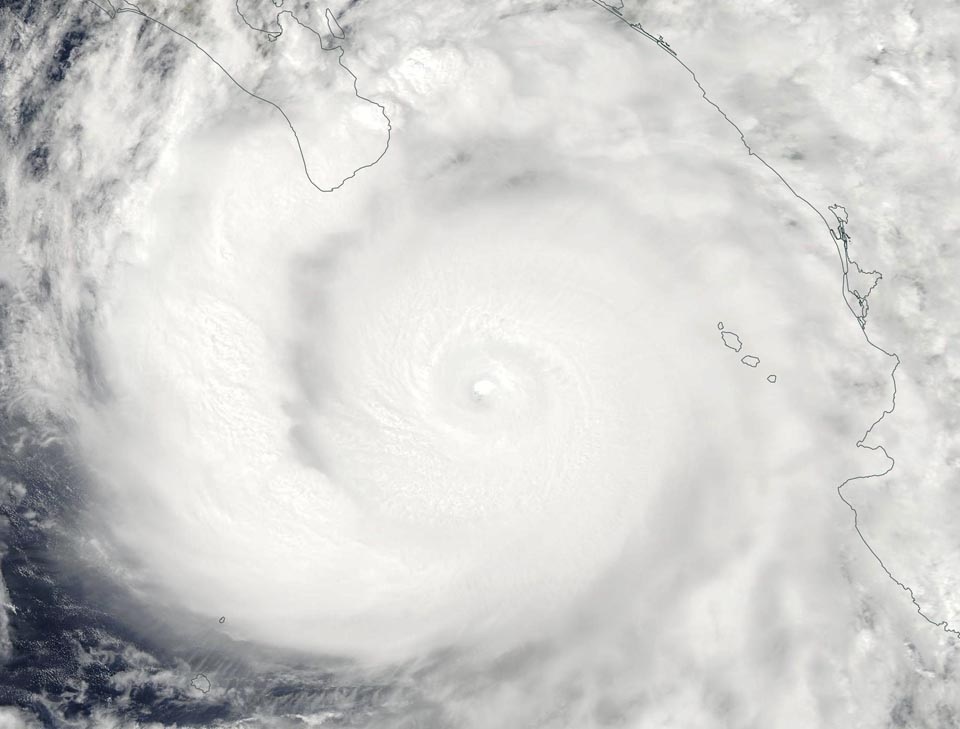
NOAA image showing Odile approaching the tip of the Baja Peninsula with winds of 125 mph.
In mid-September of 2014, Hurricane Odile ripped and roared up the Sea of Cortez, one of the strongest hurricanes in recorded history to make landfall on the Baja Peninsula. For more than 24 hours, winds raging from 60 to 125 miles per hour battered shorelines, towns, harbors and cities. In some places, rain poured from the sky at a rate of seven inches per hour, releasing tons of mudflow which buried homes and roads, beaches and cropland. When the storm abated, international attention rightly focused on the tens of thousands of people without homes, food and water; the devastated airport; the washed out roads. Fifteen people died, and for their loved ones, there is no consolation. For a few days, the stars were obliterated while paradise turned into a raging hell, and those who survived counted their blessings.

Great Egret or heron broken on the shores of Isla San Jose.
Starting while Odile was still approaching Cabo San Lucas, the Mexican government and the Mexican people put together an impressively organized emergency response, and the recovery of infrastructure has been remarkable. But nobody could count, much less assist, the tens of thousands of creatures that were scraped up from the ocean floor or swamped in the enormous swells, then crushed against the rocks. Focusing as we do on how natural events affect humans, we often forget how every hurricane that thrashes a shoreline also takes an enormous toll on the creatures with whom we share this world. The last 15 years have seen strong hurricanes hitting the Sea of Cortez more frequently. During our first season sailing here in Mexico, we were greatly impressed by the effect these storms have on the coastal human communities we visit. But this year, the devastation to the animal inhabitants was impossible to ignore.

One of thousands of sea stars washed up on beaches this year.
We have revisited some of our favorite places, astounded by the number and variety of dead specimens washed up onshore, as opposed to what we found last year. We also have been staying at new-to-us, more remote anchorages this season, enjoying the quiet, the unobstructed views, and the miles of beaches empty save for the local fauna. Since not very many boaters stop at these places over the course of a season, searching post-hurricane for unusual items along the tide line has been better than normal. Better for us, that is. Not better for the creatures whose bones and skeletons we find.

The shattered remains of mollusks driven ashore and battered by powerful waves littered the rocks far above the tide line at Puerto los Gatos.
Of course, many of the shells and such we find on the beach are the result of accumulation, of life ending on a somewhat predictable timetable. But this year, we also witnessed many instances of catastrophic death. On Isla San Francisco, we found hundreds, if not thousands of sea stars, urchins and fan corals thrown far above the high tide line. On many islands, hundreds of sandy fluff balls turned out to be the broken bodies of grebes, small diving birds that were not able to escape the deadly swells. At Puerto los Gatos, most of the shells piled onshore were not smooth from decades of tumbling in the surf, but rather broken and shattered, at times with the hardened remains of the former occupants still attached. At many of these beaches, we have previously seen great heaps of harvested shells, evidence of decades, and sometimes centuries, of local fishing and pearling use. The toll from this hurricane is something quite different.
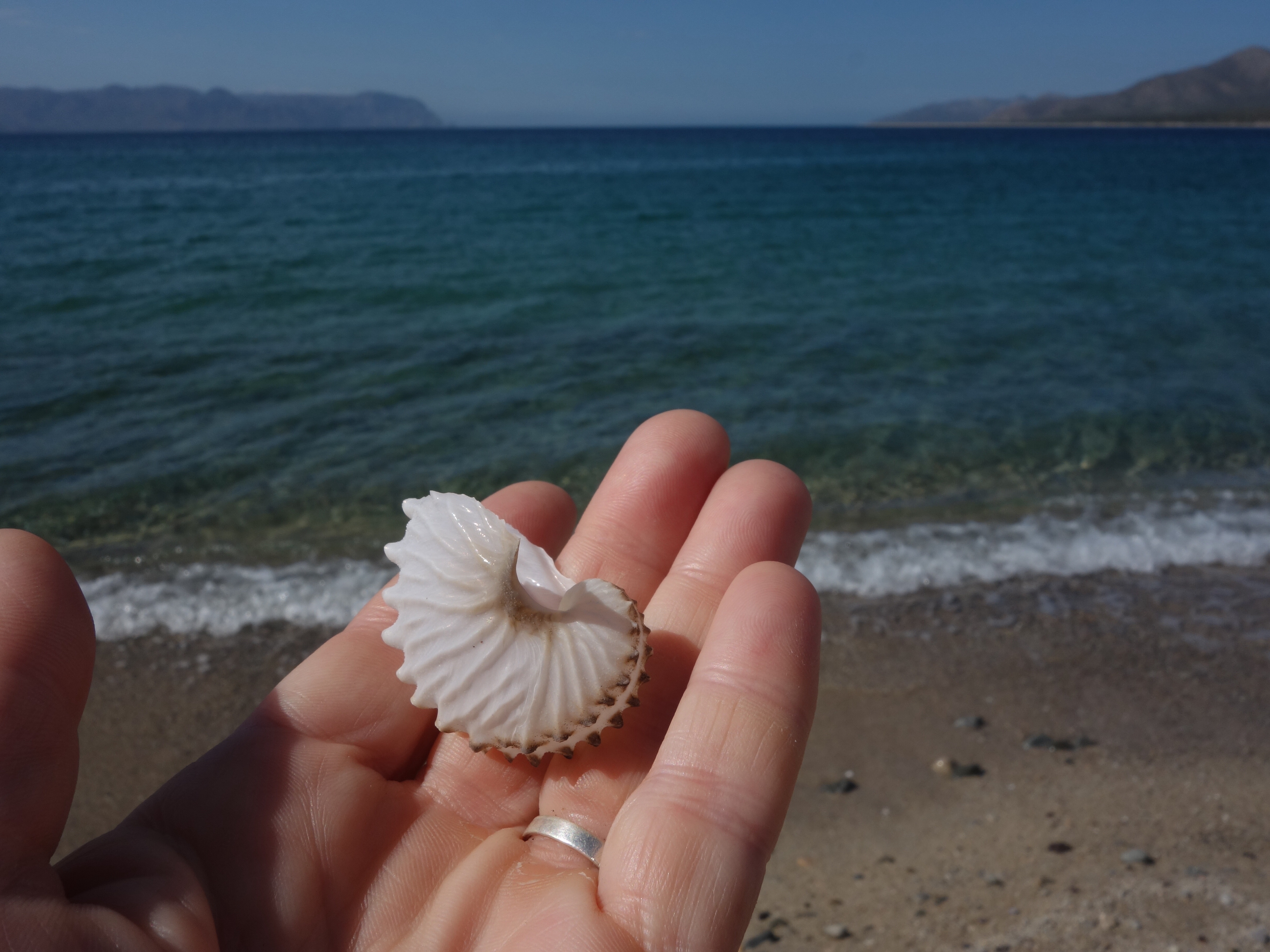
A chambered nautilus egg case I found wrapped in huge drifts of seaweed blown ashore.
Of course, creatures of the southern seas have been dealing with hurricane cycles of life and death for a long, long time. Sadly, their ability to rebound from this natural assault in light of the double whammy of human impacts is now not so certain. The Sea of Cortez is under tremendous pressure from over-fishing. The most endangered animal in the world is a small dolphin residing in the northern Sea called the Vaquita, numbering only 165 or so individuals and rapidly dying in shrimp and fishing nets while the salinity of their water increases in proportion to decreasing fresh water from the Colorado river. Many species of mollusks are seldom seen anymore, and tens of thousands of animals are killed and wasted every year by indiscriminate trawling and bottom draggers seeking shrimp and other high-value delicacies.

Storehouse of beach trash gathered and left at an abandoned salt mine building on Isla San Jose
Perhaps the most insidious onslaught of all is that engendered by the uncounted tons of garbage and abandoned drift nets which float around the Sea, tangling birds and whales and sea lions, fatally choking sea turtles and pelicans. This year a humpback whale was caught for several days in a drifting net, wrapped in tight with a dead sea lion. (We met some sailors who tried to help, but do not know the final outcome.) The natural environment can respond to hurricanes, but how can it also defend against our constant barrage of trash, contaminants and over-fishing?

The un-crushed test of a seldom-seen heart urchin. (It’s not flat, but spherical and shaped like an egg!)
While wandering the lonesome beaches around the Gulf of California, the overwhelming impression is one of not really being alone at all. Gulls and boobies, frigate birds and swallows, terns and others swirl overhead, crying out displeasure at our intrusion. Crabs and flies, sand fleas and rock lice scuttle ahead of our feet. Piles of seaweed harbor countless tiny animals of all kinds, while underfoot, the very grains of sand derive from the crushed bodies of coral reefs and echinoderms, clams and oysters and snails of all kinds, the bones of whales and dolphins and sea lions. Certainly all these living and dead witnesses to declining biodiversity must be as numerous as the stars by which we navigate to such remote and beautiful shores. Having so recently arrived in earthly paradise, will humans attend to this poignant testimony before it is too late?
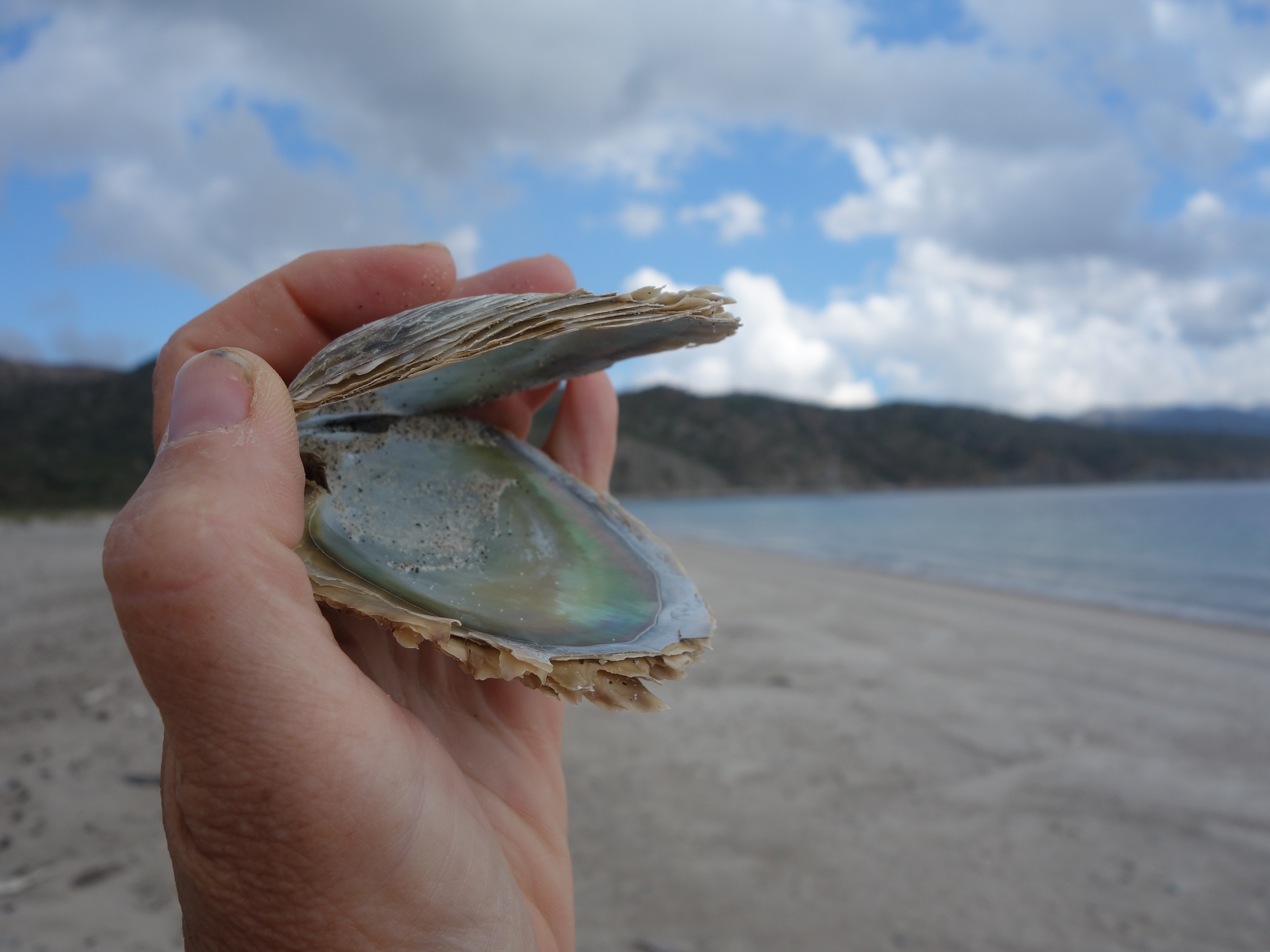
Pteria sterna, a rainbow-lipped pearl oyster. Thrown ashore this year in large numbers, these rare native oysters can produce the most beautiful and valuable pearls in the world.
(Please visit some of the organizations I have listed to the right. You may be surprised to see that we include a commercial enterprise, the Sea of Cortez pearl farm. They have won numerous awards for environmental stewardship and fair trade business practices, and are a shining example of how private enterprise can make a positive difference in both human quality of life and in preserving biodiversity and environmental health. And, their pearls are exquisite!)
 sailing pelican moon
Thank you for a beautiful description of your life down south. We’re getting ready to head north from Port Angeles soon. We’ll keep in touch, Paul & Lyn
fascinating and interesting reading, looking forward to the next adventure. chic