
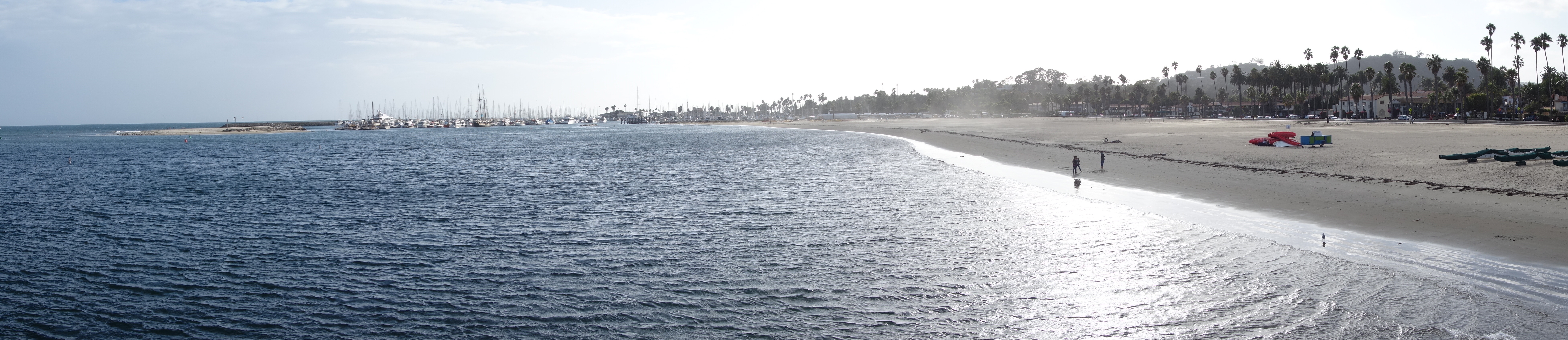
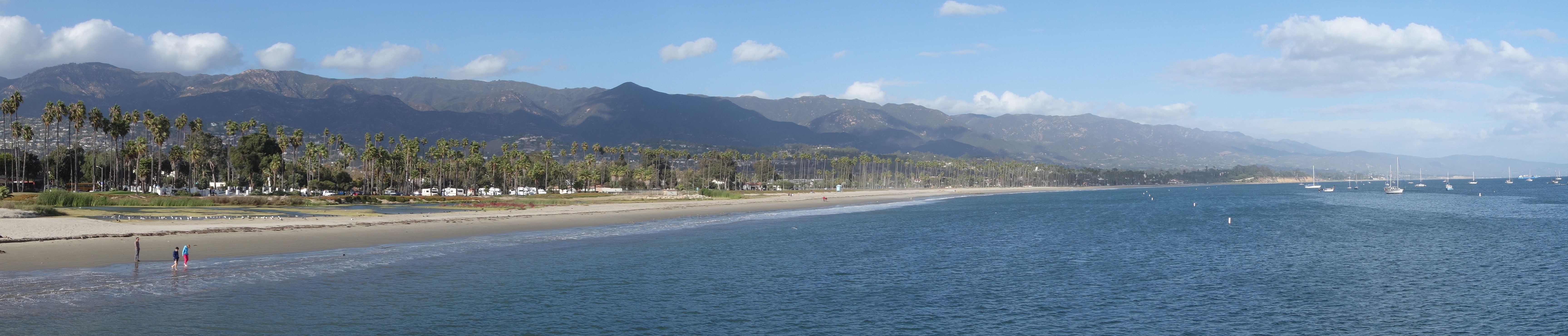
 Palm trees, stucco, clay roofs and tiles everywhere. We must be in Southern California. Time for a couple of days in the sun! We were worried, at first, that toney SB would be too expensive for our cruising budget, but we had no problem finding lots to do and eat, and all for nearly nothing! We spent three nights in Santa Barbara, and enjoyed two full days of walking all over old town, visiting the most important Spanish and Mission Revival sites, taking the bus across town to to see the old Franciscan Mission, and even catching a flick at an historic theater. (“Rush,” and don’t. But then, you’re not reading this for our movie reviews, are you?) The ruins of the 18th century presidio were a draw, but somewhat less so after we learned that most of it is a from-the-ground-up reconstruction, since centuries of weather and urbanization left most of the old fort nothing but rubble foundations buried beneath newer buildings. Even so, part of the old Spanish fort has remained intact all along, and the rebuilding is historically accurate, by all accounts. Certainly worthy of a visit, especially to learn about various aspects of California history that may have escaped the usual text book renderings…
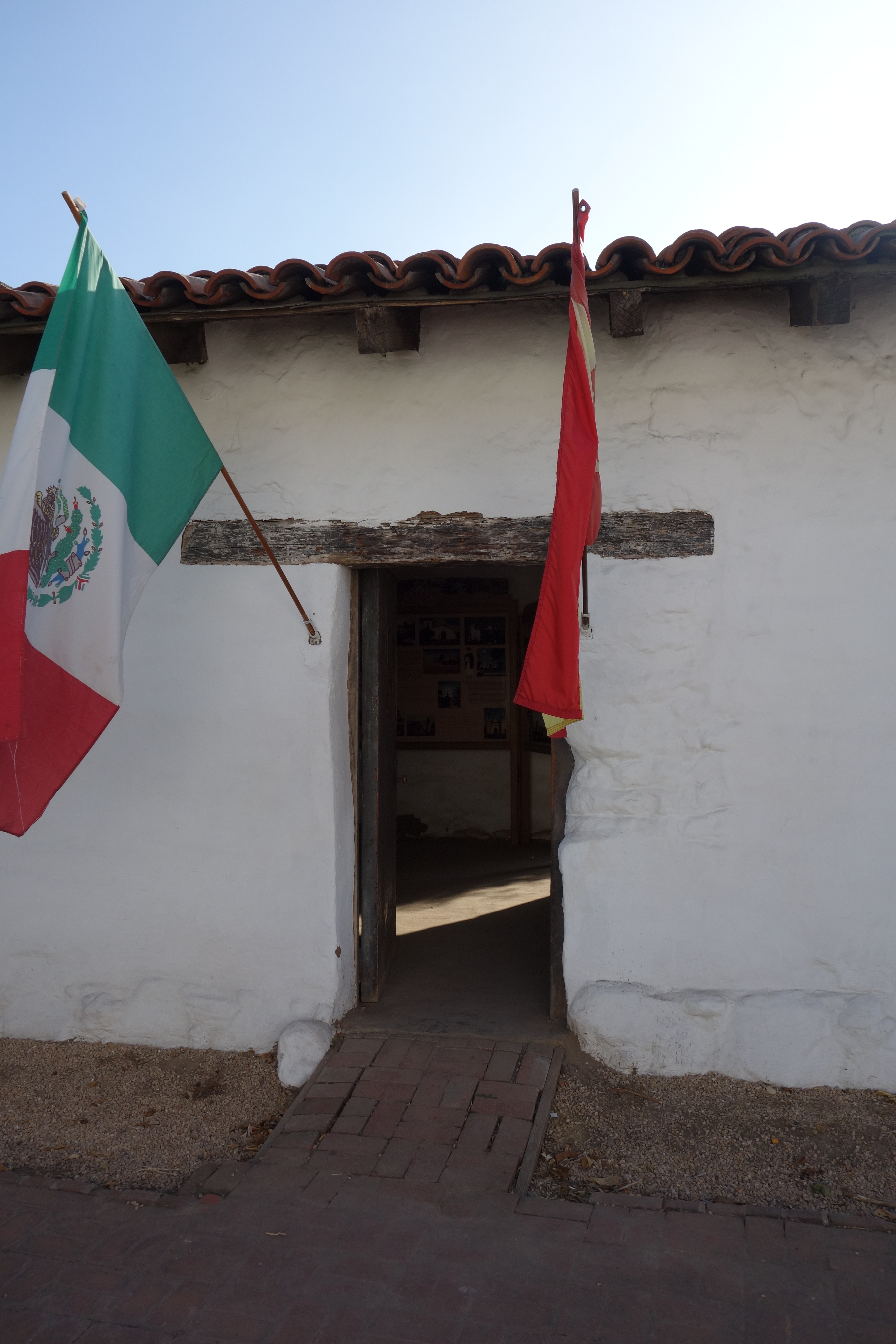
One of the only sections remaining from the original 1782 presidio compound.
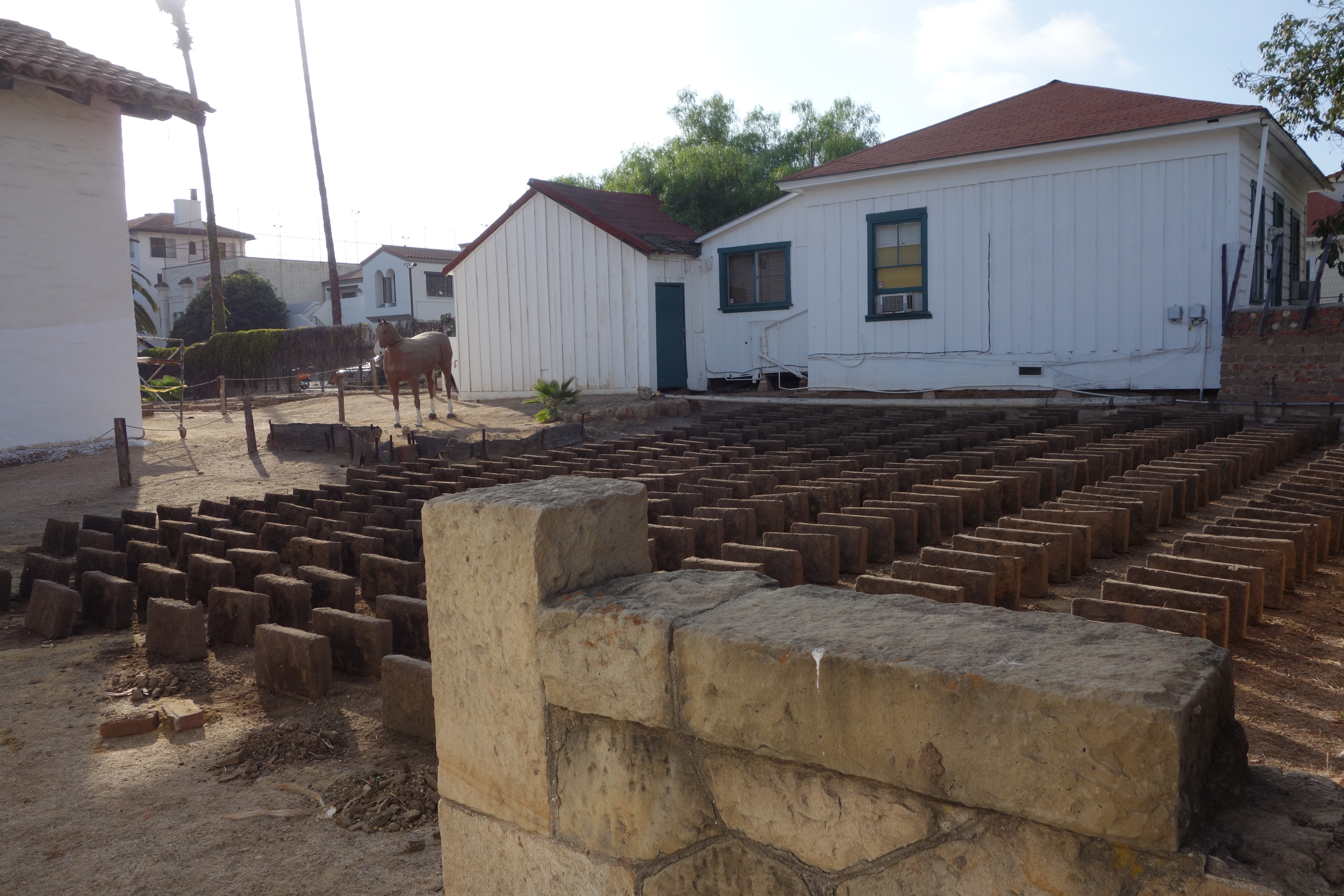
The brickyard where all the adobe bricks are made to rebuild the Presidio.
We had a fun bus ride across town to see the old Mission. While we were at the transit hub we met an outgoing elderly woman who helped us figure out the routes. Conversation ensued, and turned out that although she was born in Santa Barbara, she spent most of her life in Idaho, where she helped found the Environmental Center, an organization which occasionally worked with the conservation group I helped co-found in Bozeman! The ever-shrinking world manifested yet again.
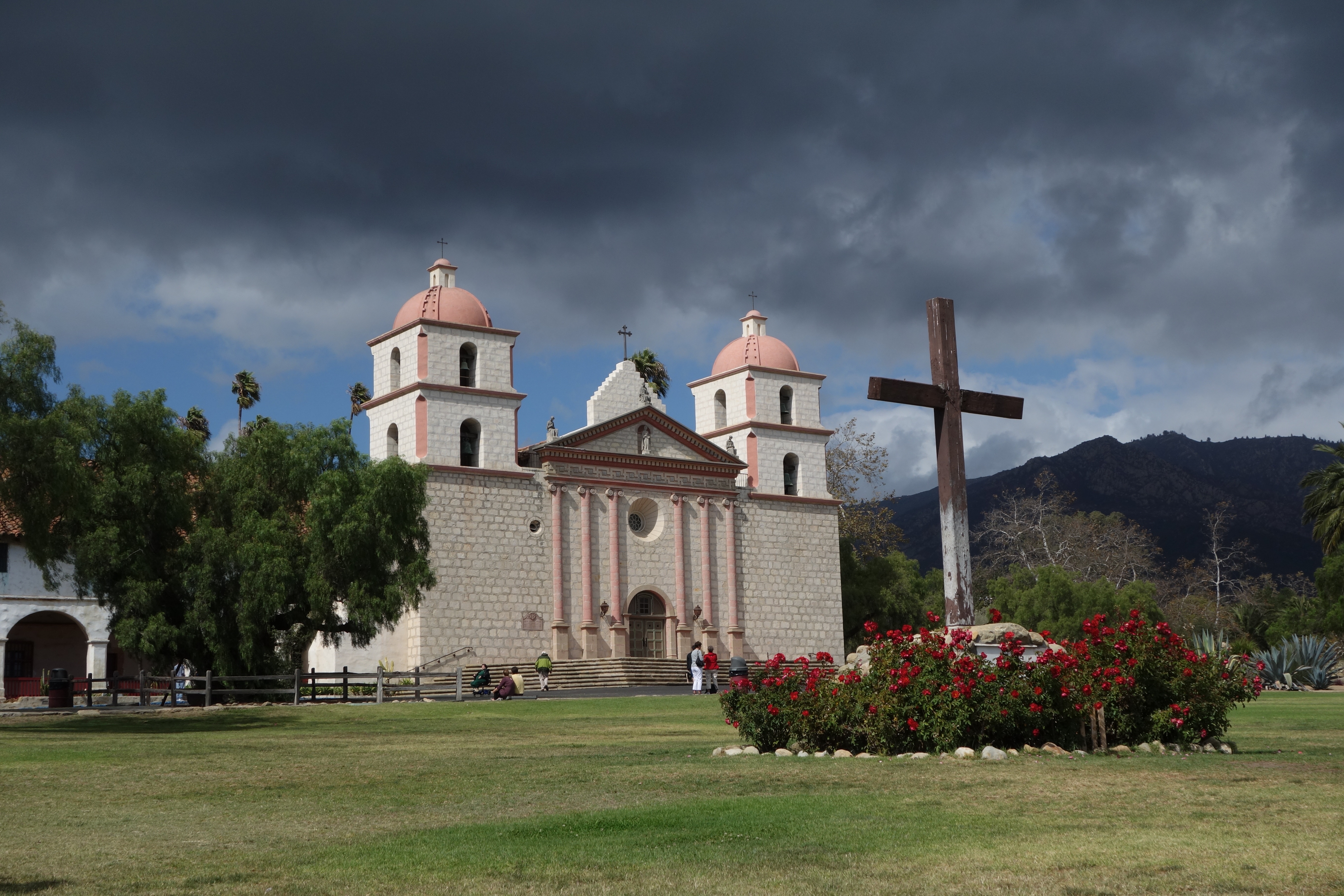
Santa Barbara mission, first built in 1786, destroyed by earthquake in 1812, rebuilt to its present configuration in 1820, and largely unchanged since, save for periodic repairs and restoration of the interior artworks.
For my part, the old mission sites of California cannot be visited without provoking a mixed response: architectural admiration co-mingled with shame that a Christian institution inflicted such misery and cruelty on an established culture. There were, I believe, 135 Spanish missions in California. In each case the friars promised the local inhabitants that after 10 years, the mission buildings and grounds would be given to the people. It never happened, not even once. In the case of Santa Barbara, the Chumash people came somewhat willingly to work on the Mission, believing the promises of prosperity. Of course, they were soon relegated to the role of near-slave.
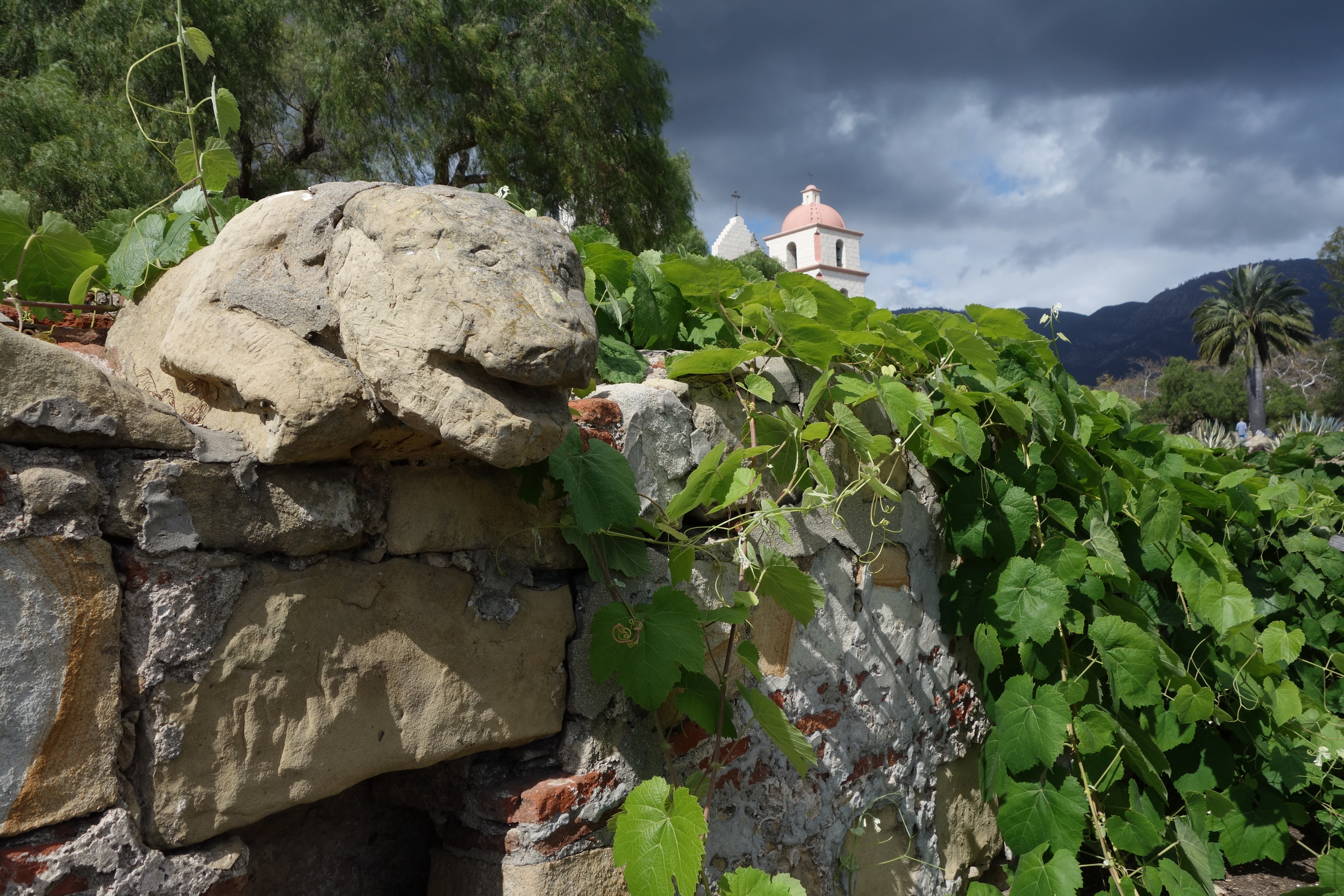
This Chumash carving of a mountain lion may be the oldest public sculpture in California. They carved it on the low roof of a lavadoria they built for washing clothes (in the upper canal,) and for washing bodies (in the enclosed space below.
After a major earthquake in 1925 flattened most of downtown Santa Barbara, the town decided to rebuild to a theme: “Mission Revival.” This major rebuilding effort resulted in the Santa Barbara you see today – white adobe and red clay roofs, Spanish tileworks and fountains, tropical flower-laden bowers, shady interior courtyards and public spaces. The county courthouse in particular is a spectacular public space. Just standing in line to pay taxes or renew a registration could be a pleasure in this town. 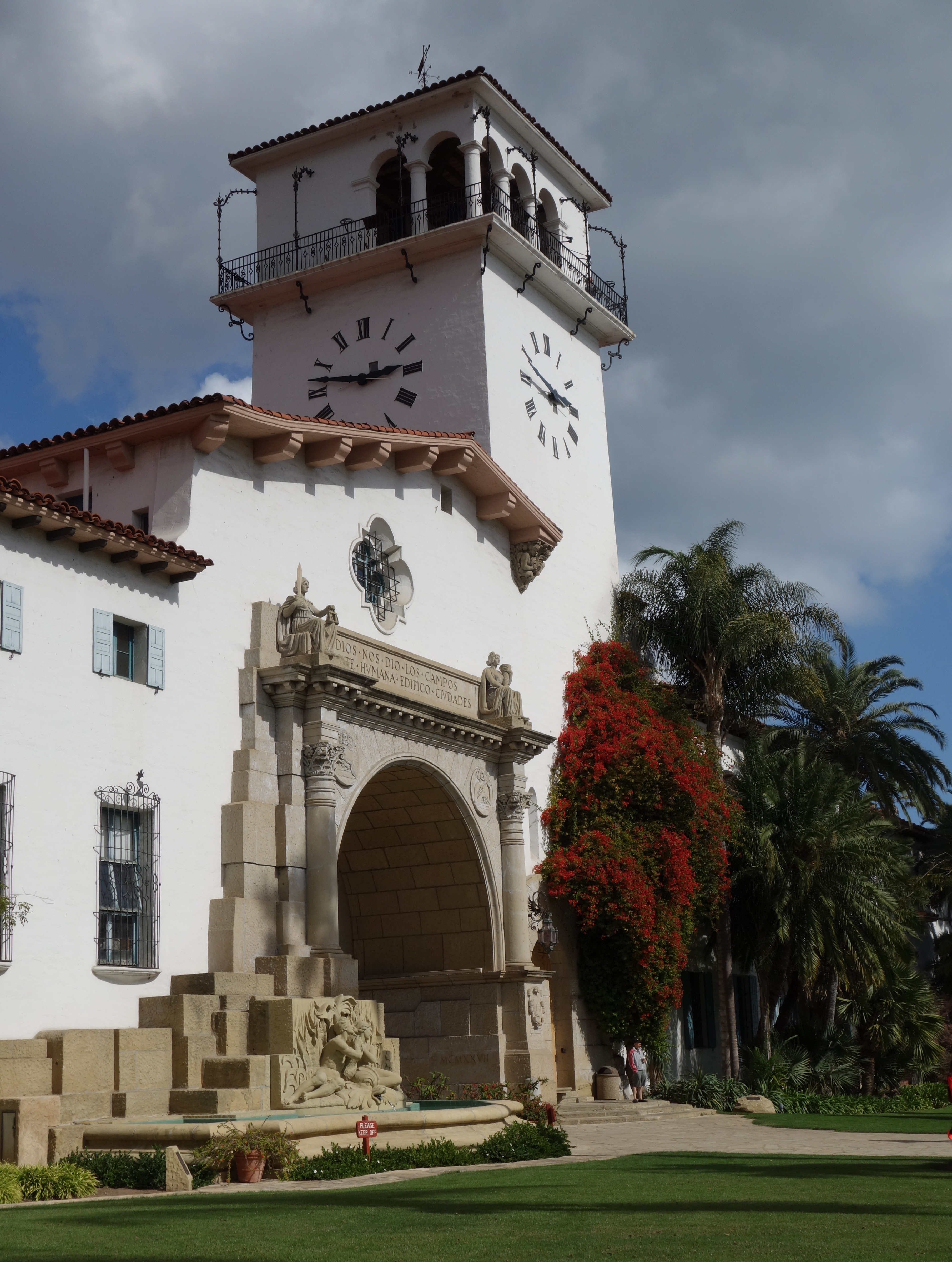
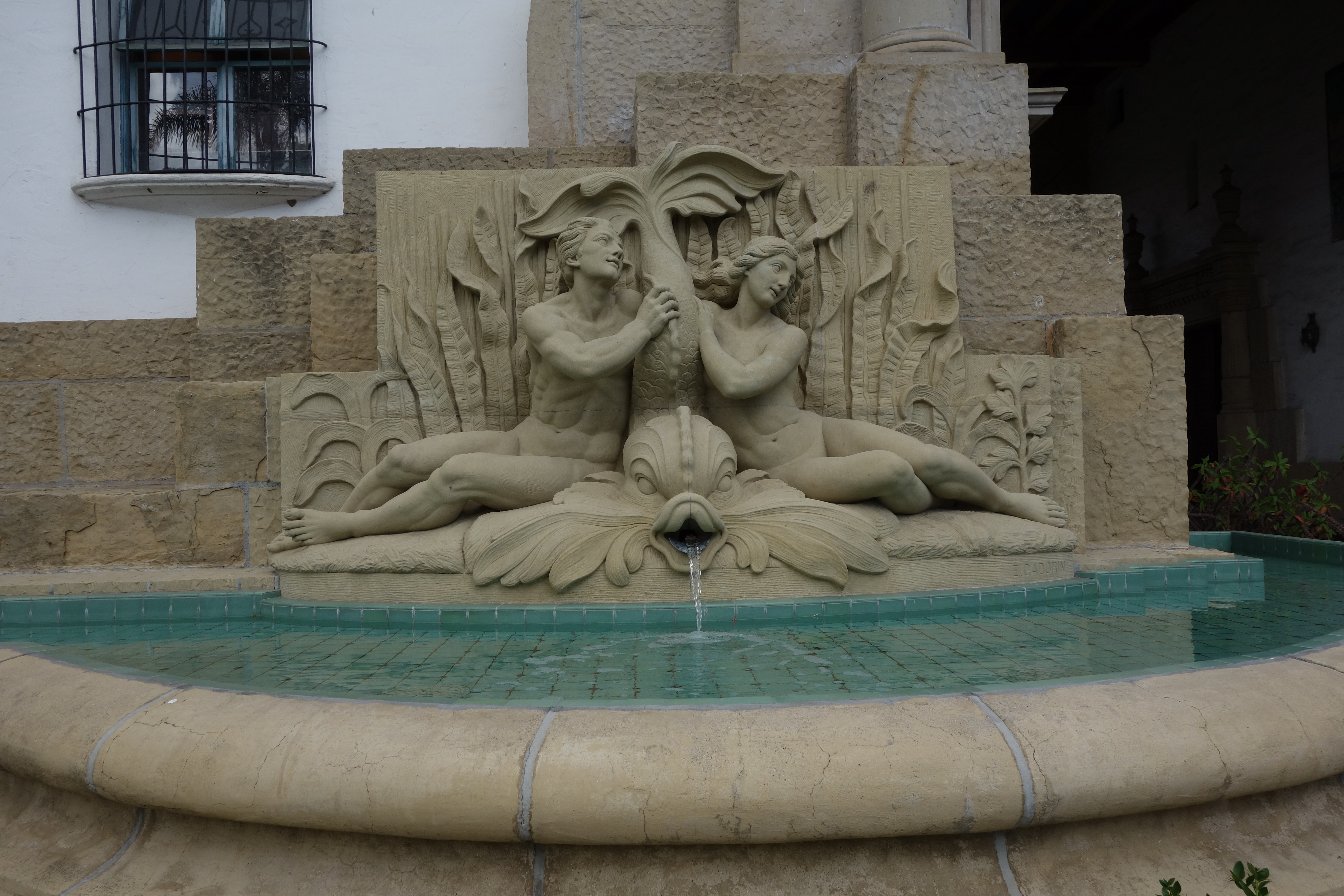
We were gratified to see our sailing trip immortalized in front of the courthouse.
Evenings and mornings, we enjoyed being around the working harbor. I had no idea how many tons of sea urchins are hauled out of the ocean and sent to Japan! Big boats, small boats, stand-up paddle-boarders all brought their bags of urchins to the main dock where a line of trucks lined up each night to weigh and collect the spiny purple creatures. Most were larger than a softball. Judging from the wetsuits and snuba gear on the back of all the boats, people are diving for these urchins, not bottom trawling.
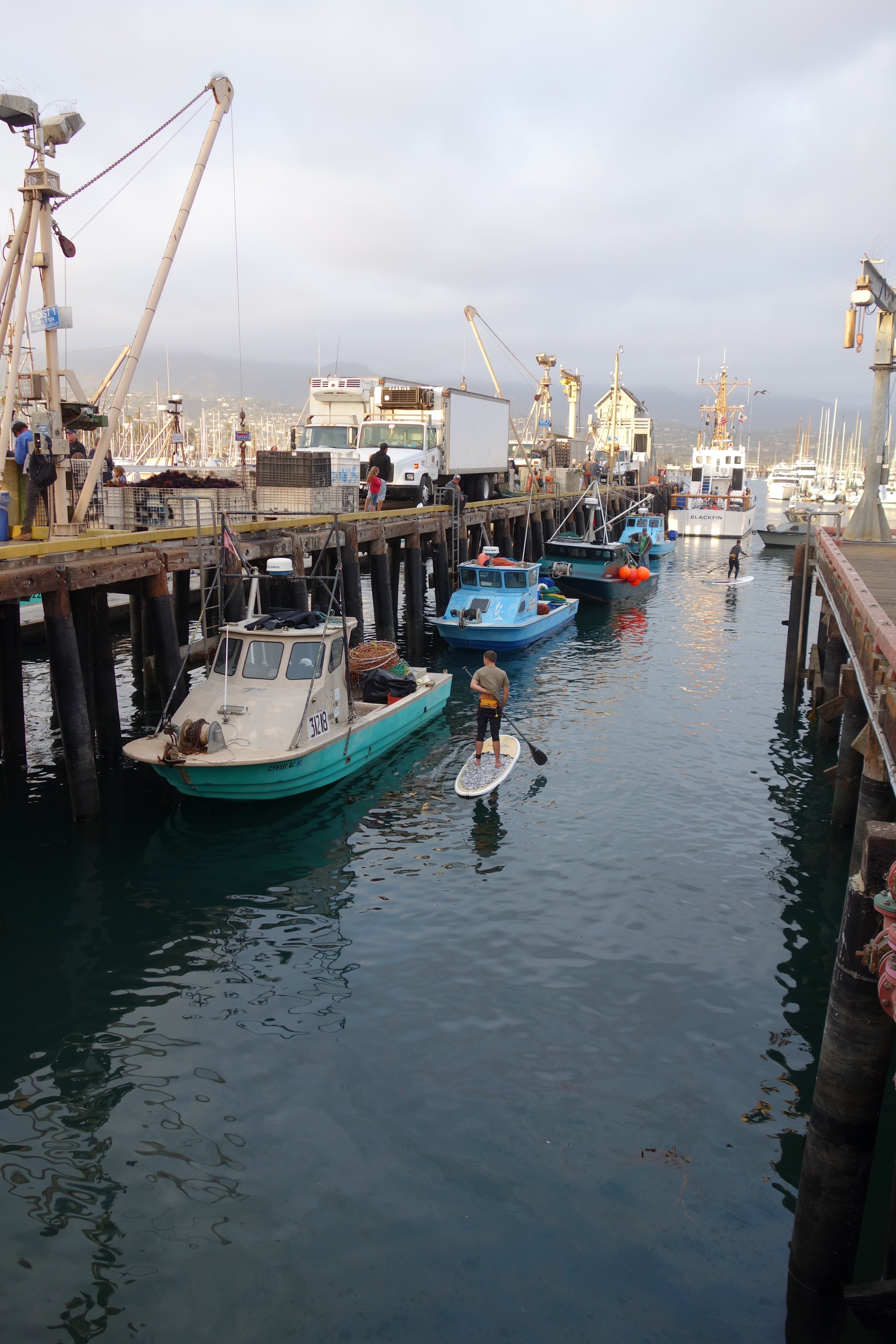
Can you find the giant crate on the dock heaped full of sea urchins?
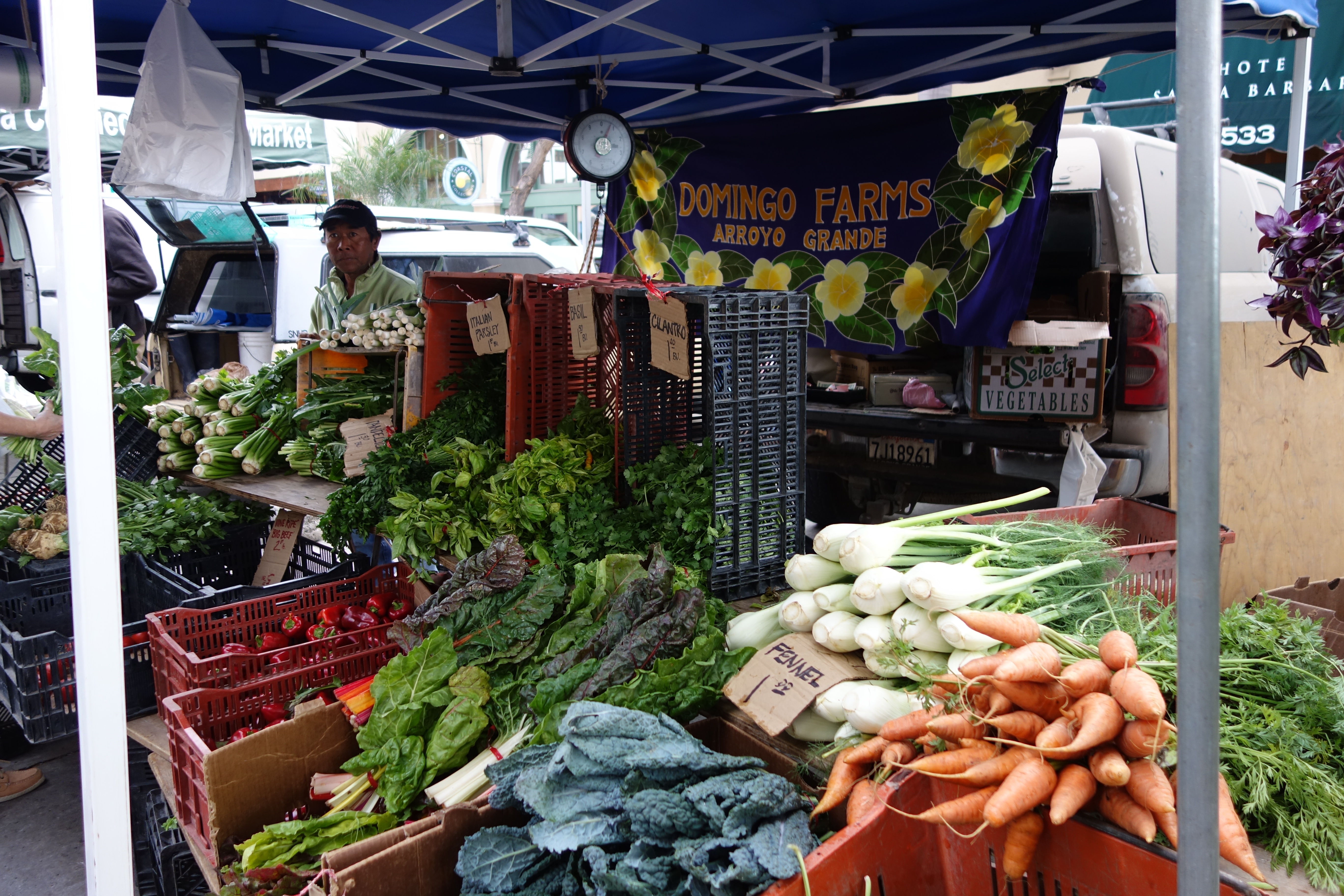
Tuesday evening, we found ourselves in the middle of a lively farmer’s market. It was easy to forgo restaurants and eat on the boat, when so much delicious fresh produce and seafood was available. Santa Barbara doesn’t have to be an expensive destination, but the ambiance and exceptional food options make it feel luxurious, even on our budget.
Our last evening, we stood on the seawall protecting the harbor and watched a sailboat race series. We think we counted five different classes of of boats. Each race started about ten minutes after the preceding one. It’s always a wonder to me that more boats aren’t wrecked at the start of a sailing race.
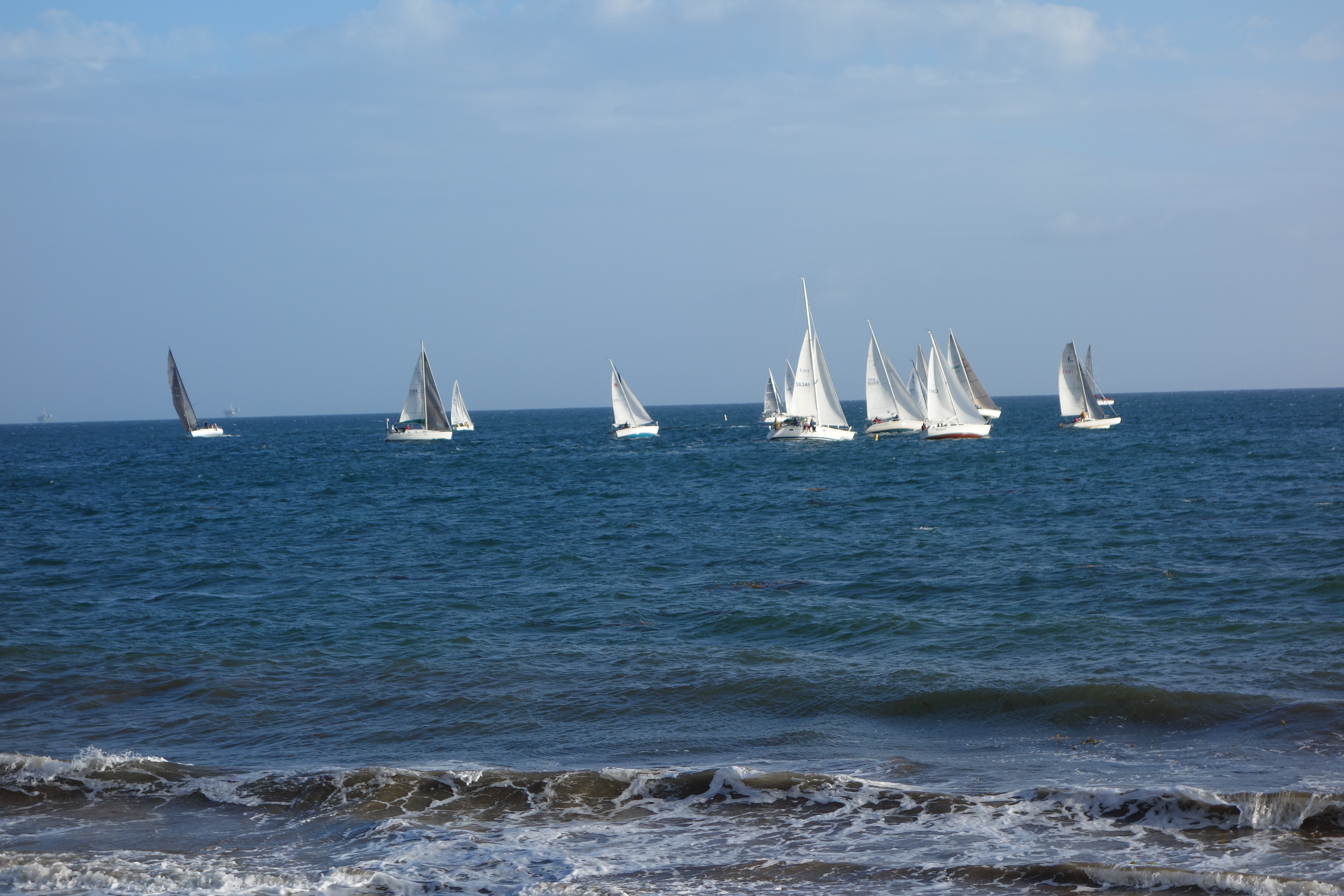
Two classes of sailboats milling around at the start.
Feeling certain that the next day would be a fine day to set sail from this place, we bought some fish from the local seafood market and walked back to the boat. Avian predators were also out harvesting the sea, and we nearly got stuck waiting for this one heron to move. It was very focused on whatever it saw swimming around next to the dock, and set up quite a ruckus when we passed – I actually wondered if it would strike out, we had to pass so close to it!
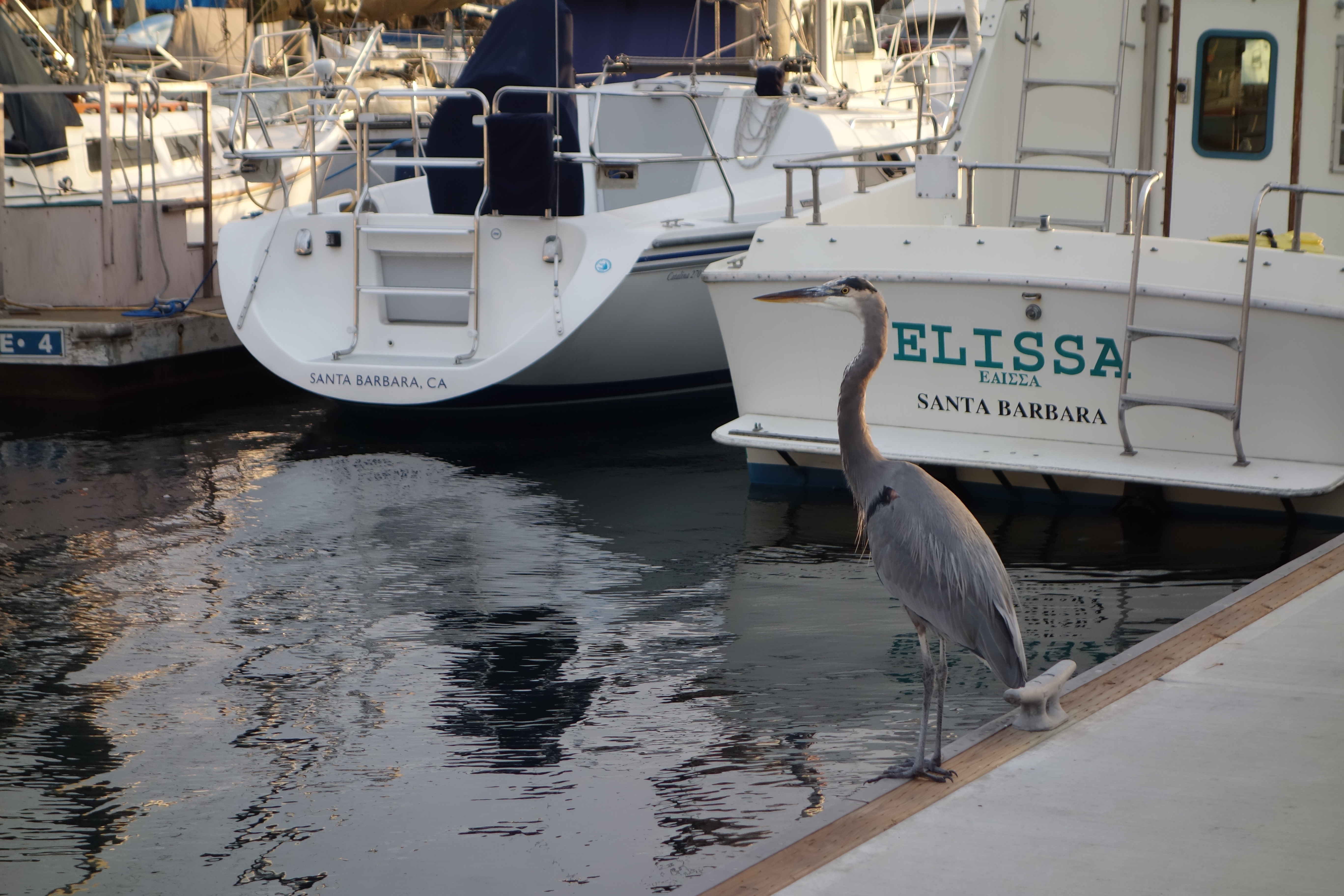
Great blue on the hunt.
We enjoyed our visit, but were more than ready to continue our voyage. So long, Santa Barbara!


