

Bahia Santa Maria – 4.5 miles deep and 11.5 miles long – felt wild and mysterious and big. Although it is well protected from north winds by a mountainous cape, a significant swell breaks on the beach, and we anchored half a mile off to avoid being rocked too violently by the wash back. Feeling a little disoriented anchored all alone in the wide open space, we spent the first day cleaning up, doing a wee bit of laundry, a wee bit of boat maintenance, a wee bit of sleeping on deck in the sweet breeze and hot sun. We watched the pangas come and go all day, marveling at the speeds they travel, the amount of air they take on when hitting the swells, the way the pangueros are able to stand up in the bow without hanging on to anything. We’re starting to peel back the layers of our Pacific Northwest-ness: finally wearing fewer layers of clothing, walking at a slower pace, admiring the local skills and the southern wildlife.

A lagoon pours in and out of the bay near the spot where we anchored, and the advice we had was to land just to the west of where the lagoon waters meet the sea in a great, rolling standing wave that carries 100 feet or more into the lagoon, flattens out, then rises again to repeat the run. We gathered our nerves, rowed the distance and finally made our landing, a little wet but not soaked, and not without quite a bit of lively discussion regarding proper angle of approach, timing the waves, going at a different tide, who is in charge here, anyways, and anything else two people who are very tired can argue about when they are under stress doing something new together for the first time.

Ok, so we landed hard, dragged our dingy up to the rocks, dried off and cooled off. Around the corner we met some nice guys who had just come in on their panga with a load of shark, tuna, and lobster. In Spanish, we asked permission to cross through their village. In English, they cheerfully told us it was fine, and that the fishermen in the next village up the lagoon were friendly too.
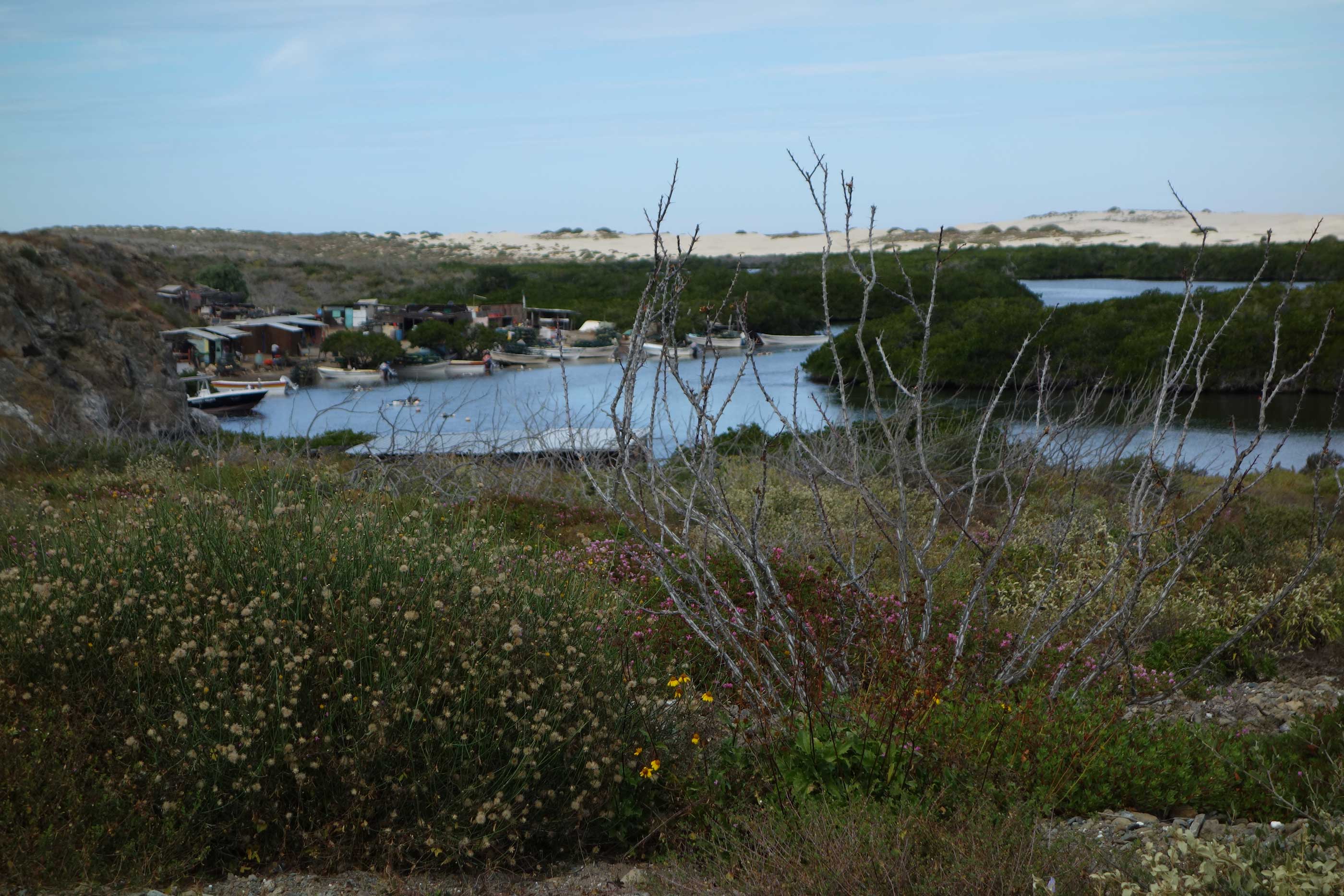
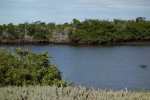
We walked for two hours or so, along the mangrove-lined lagoon, passing through a couple of small fishing villages made up of a few dozen shacks and houses. We saw several broken-down old trucks, and noted that they were all fords of about the same vintage. Maybe everyone buys the same kind of truck and then uses these roadside anchors as a kind of parts depot? We only saw men, and they were repairing nets, painting floats, sitting around in the shade talking, fixing motors and other bits of gear. Everyone stared at us, and then smiled widely when we said our hellos in Spanish and asked a question or two.

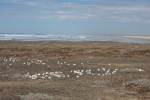
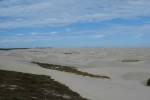
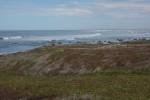
The shoreline of Bahia Santa Maria is actually a long, parenthetically-shaped island made up of the high Cape itself and a long, relatively narrow spit dividing the Bay from the Pacific on the north side. We walked across the width of it, sometimes traveling by great sand dunes, sometimes walking through the brush, but mostly plodding along on the sand road.

A group of guys riding in the back of a newer (ford) truck passed us by, and we wondered why they would be carrying a truckload of sand to the beach… A few steps later, we came upon some just-completed road repair work to an arroyo crossing, and realized we had just met the road crew.
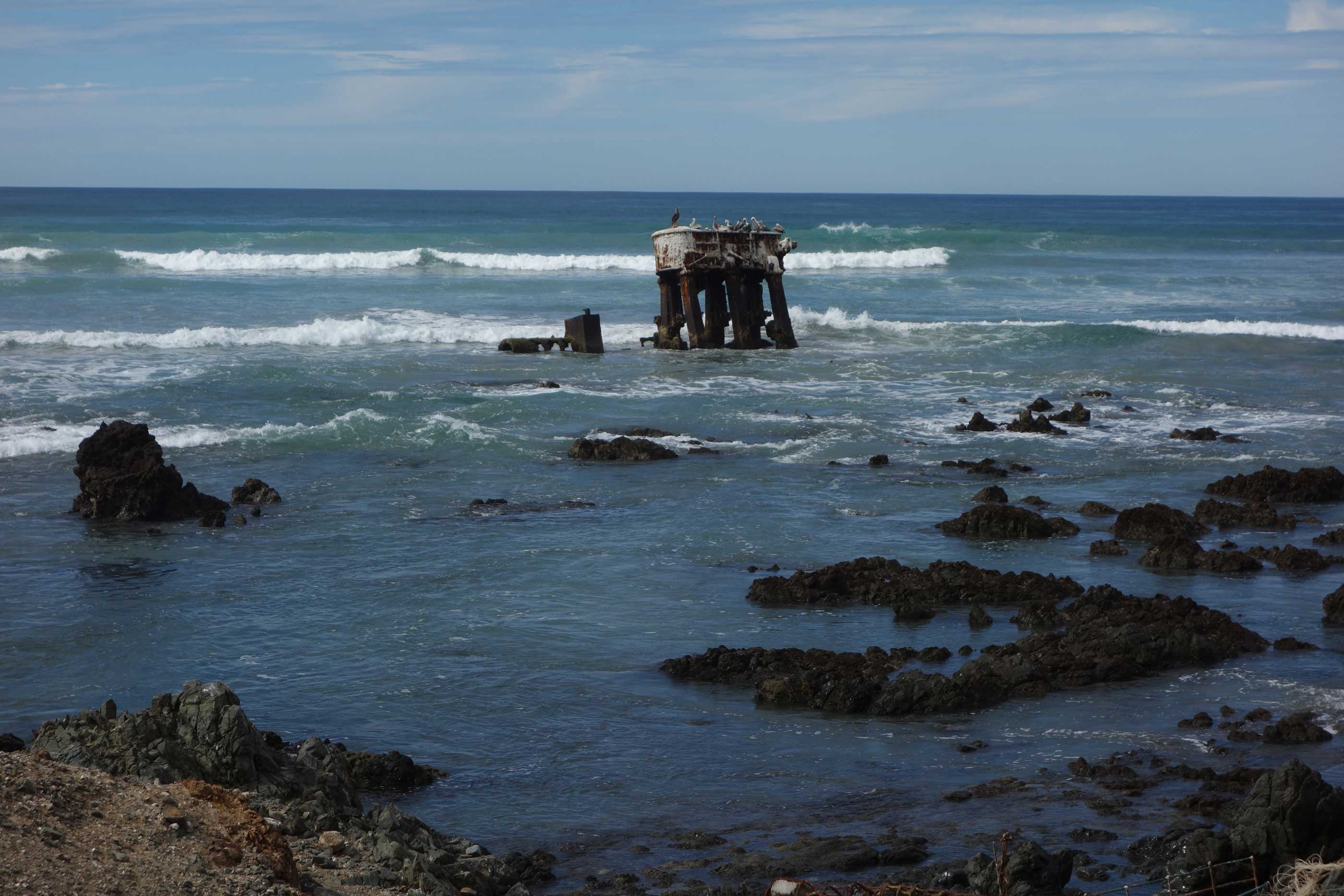
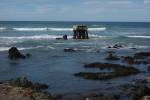
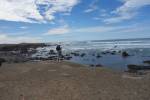
Once at the shore which we had passed by as we rounded Cape Lazaro the previous morning, we found large shells, bones, skulls, and the eerie remains of a large steamship which had missed the Cape and came to destruction on the rocks.
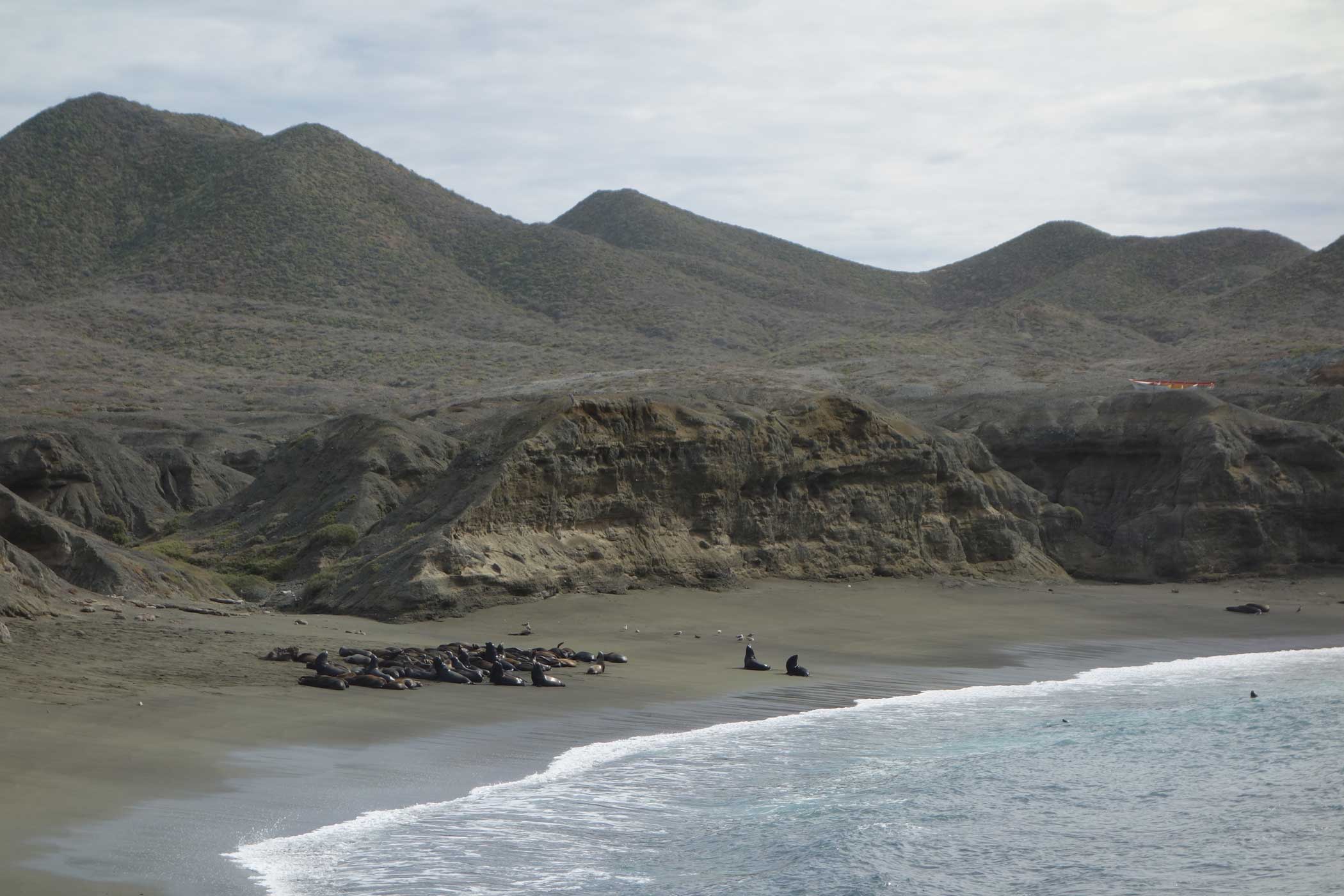
We followed the rough road around to the Cape itself, and spotted a large, bright orange panga positioned at the top of the bank, as though ready to be launched at a moments’ notice. Since the lighthouse was nearby, we thought perhaps this was a rescue vessel, and were impressed by the boat skill and courage it would take to launch safely through the rocks and surf we saw all along the shore. Looking down to the sand, we were then delighted to discover a colony of stellar sea lions sunning themselves, the big bulls barking and coughing and throwing back their glistening heads. We did the same as we ate our lunch, although we don’t think we are as successful at speaking Sea Lion as we are at speaking Spanish. Full of sun and wind and new geography, we headed ‘home’ back along our outbound track.

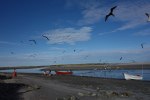
As we approached the beach, a large flock of magnificent frigatebirds was wheeling and swarming in a chaotic rivalry. Something was up! We hurried on and found three men unloading their panga full of shark and tuna. They cleaned the fish and tossed the entrails out to the pelicans and gulls. The frigatebirds then swooped down and pecked at the recipients until one disgorged their meal. Frigate birds are also called “Man o’ War” birds because of this bullying. They are a southern species, and Bahia Santa Maria shows on the map as the northernmost place where they are found. The desert hills, the cactus and sand dunes, the fierce heat and the tropical frigatebirds made it all real for the first time: we’ve sailed a long way from home!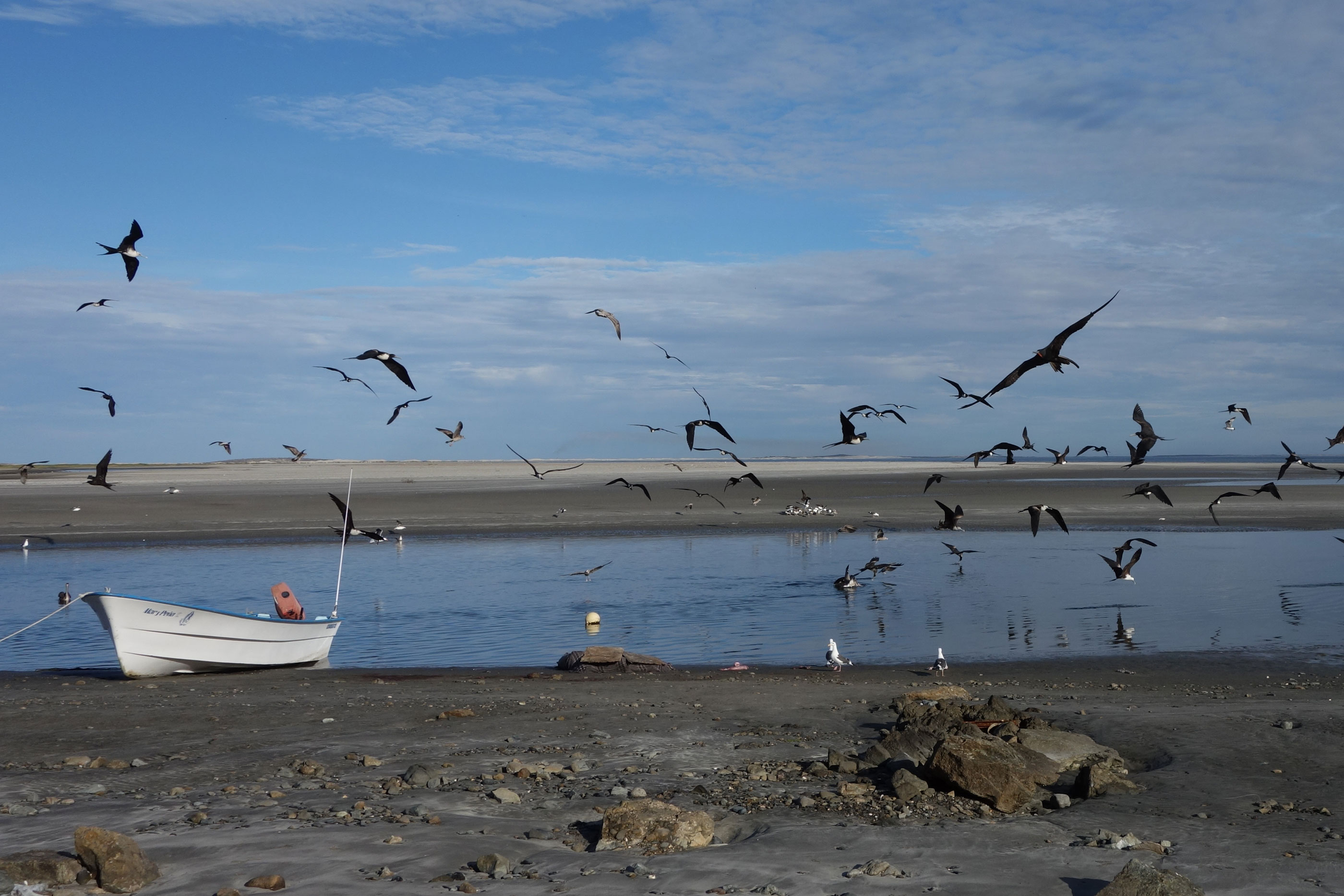



 sailing pelican moon