
Sunday morning was drizzly, foggy, moist and salty, the air lingering on my upper lip and beading on my wool sweater in only a five minute walk up the dock. After sleeping late, enjoying brunch and doing a bit of boatkeeping, we took ourselves up the eastshore Road for a look at what Bodega Bay has to offer.
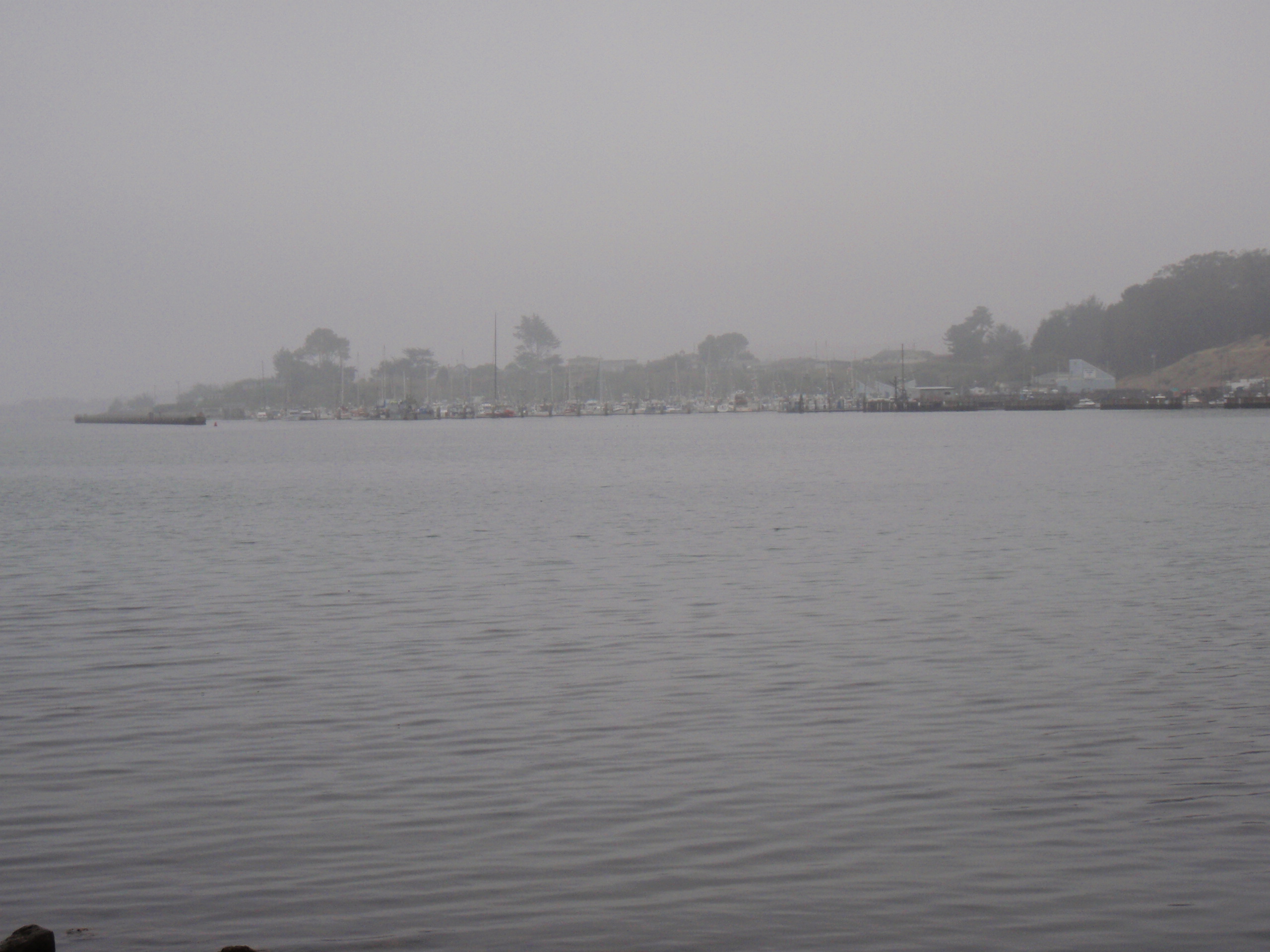
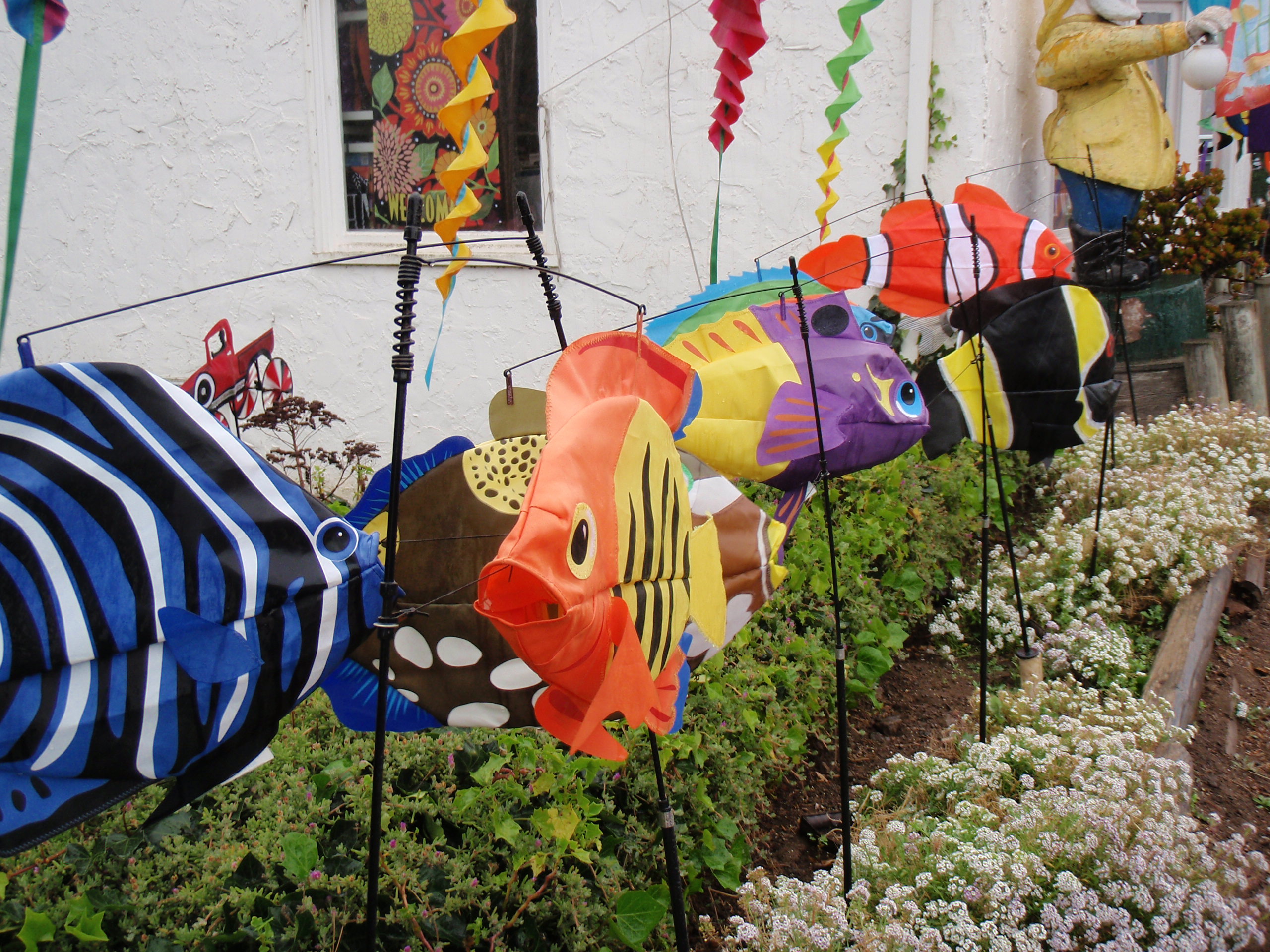
A mile and a half of roadside strolling brought us to the opposite side of the bay from Spud Point marina, which was barely visible through the fog. We crept up a narrow, twisting roadway, sharing the right-of-way with crazed weekend drivers, and finally found a small cluster of gift shops, restaurants and a very cool kite shop.
The highlight of the day was being to gaze down upon the “turning basin,” through which we had passed the day before. Some accusations were made, reputations impuned, nay, trashed, as certain members from both the Rhino and Pelican Moon crews debated which set of buoys designated the corect final approach into the marina. Being able to see the basin from on high answered all questions. It’s always nice to have a decisive answer in such situations.
On the way back to the marina, we noticed a very active trailhead, seemingly utilized primarily by horseback riders and their steeds. We determined that the next day we would take the trail through the Bodega Dunes to the outer coast, and see what the predicted storm swell was doing to the beach.
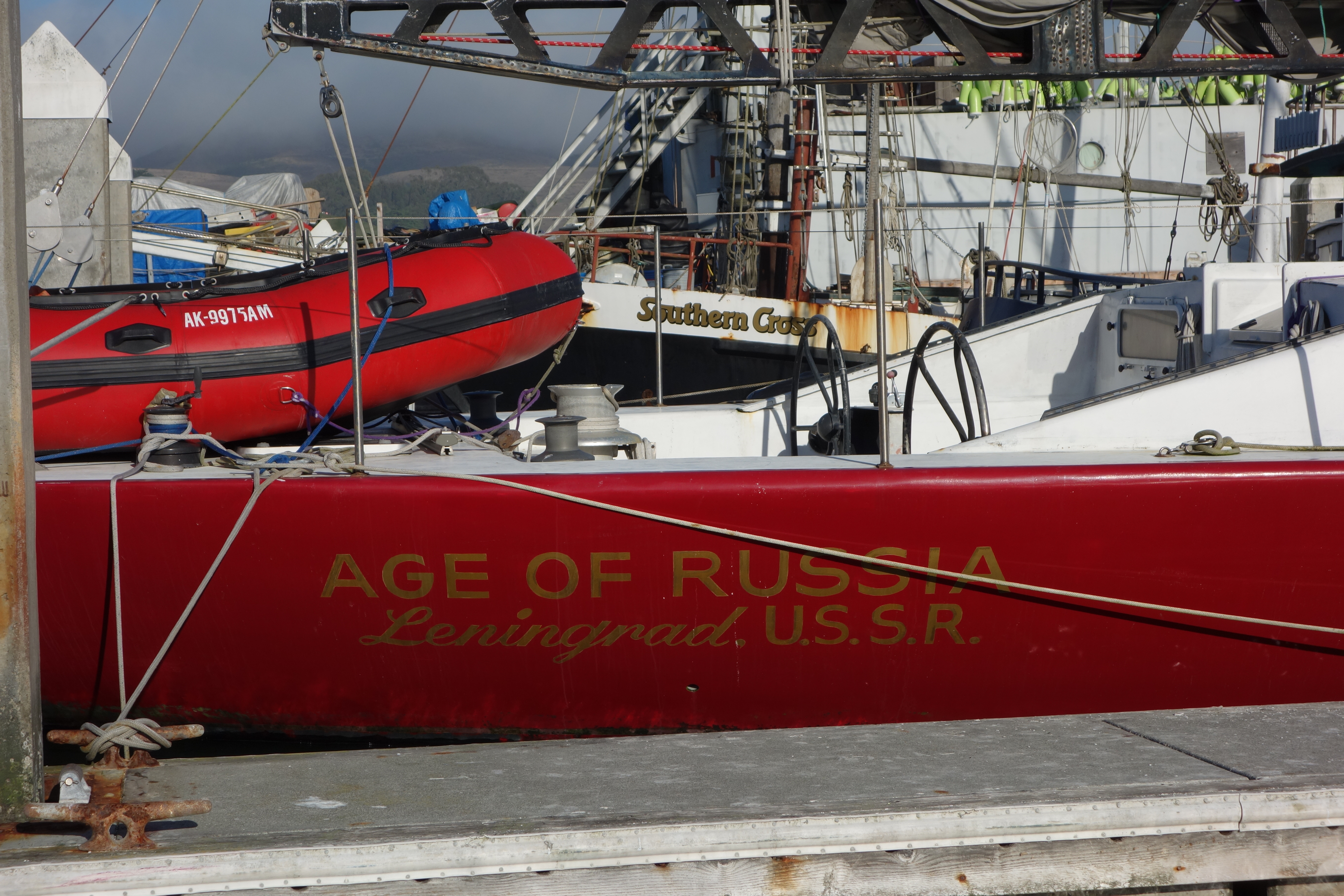
Monday has turned out to be a much drier day, with the sun peeking out for an occasional visit. We retraced our steps of the day before, enjoying the sunlight while it lasted. Three slips over, a faded red boat took on a more dignified hue: “Age of Russia,” the Soviet would-be contender in 1992 America’s Cup race, is wating in Bodega Bay for a new owner. According to internet archives, the boat never touched water during that year’s cup: the consortium building the boat failed to get all the proper permits in advance, and the race committee would neither let it compete, nor even be put into the water. This early compsite racing boat narrowly escaped being landfill without ever raising a sail, and has since had a couple of owners. You can purchase this 12-meter piece of sailing history for a cool $149,000. It cost 6 million rubles in 1992 to build.
We made our way to the trailhead, strolled through the campground and then cut over the dunes to find the beach. The sand dune ecosystem here seems to be very intact, with hundreds of cypress trees holding ground, and lots of native plants still keeping up with the iceplant. We wandered on and off trails through the grasses and gnarly trees, ending up on a new-looking road that went up and over the dunes and down to a beach parking lot somewhere to the north.

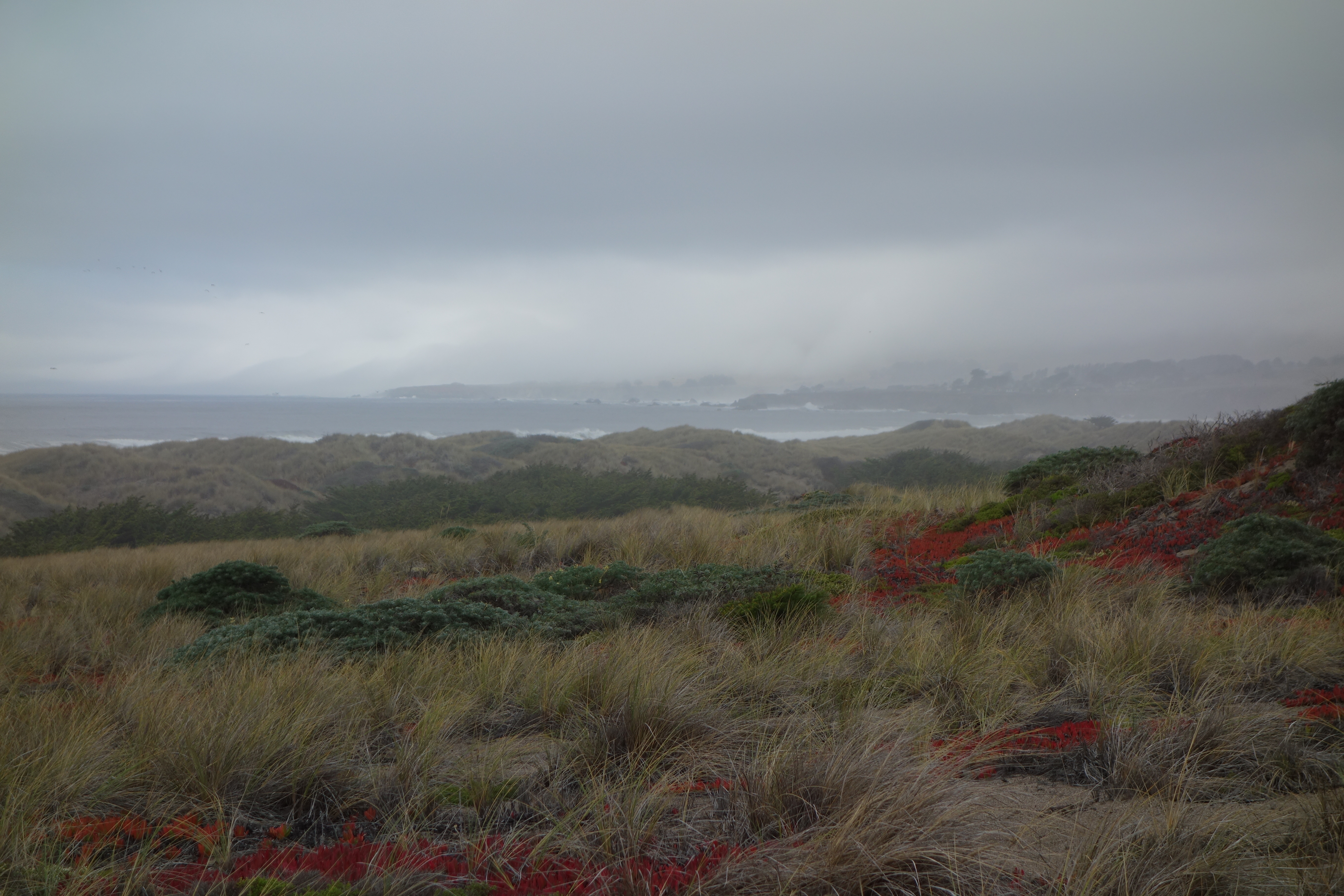
We left the road after exchanging stories with a surfer dude who was checking out the waves – not as good as yesterday, he said, when the waves were much cleaner. Today it was just messy – a washing machine. He talked about surfing with great white sharks, and about the increasing number of attacks in the last couple of years. We shared whale tales and sea stories, then we left the road and plowed across a final stretch of scalloped dunes, finally arriving to overlook the beach.
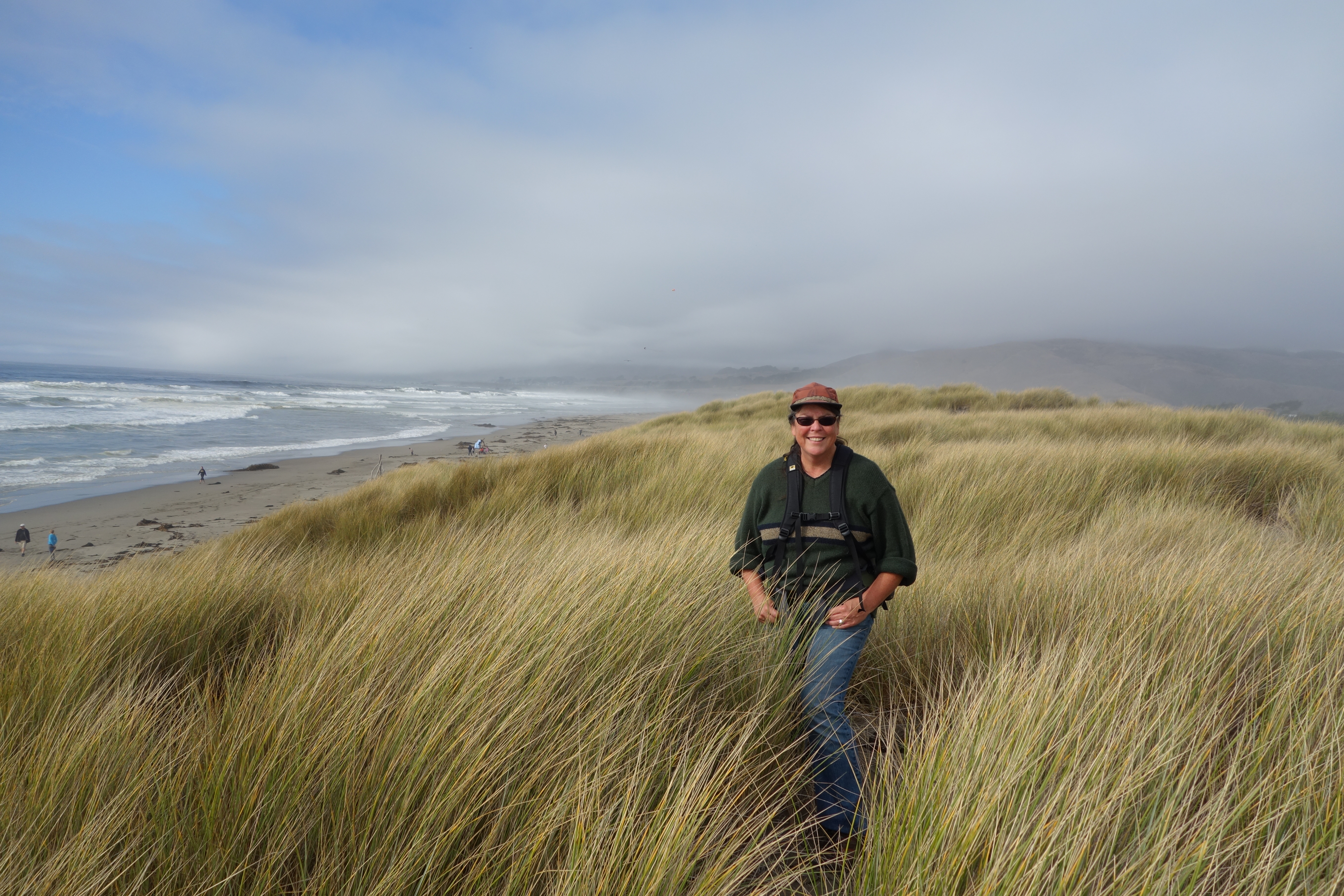
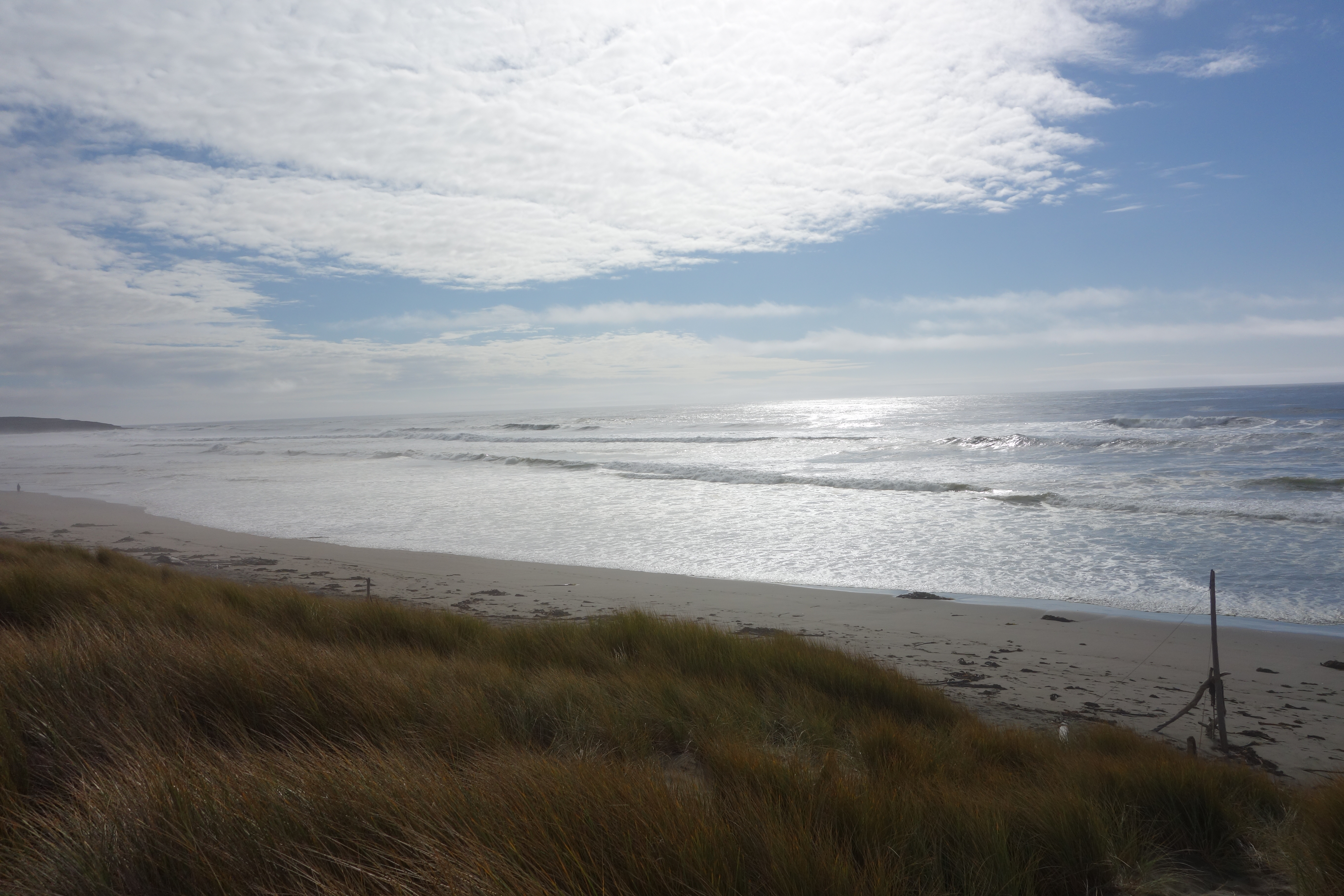
We’ve been listening to the roar of the breakers from the marina, and when we got to top of the final dune, we could see why we were so smart in coming in from the weather to rest at Bodega for a few days. The breakers were stacked up three and four deep, and were pretty good-sized, maybe 10 – 15 feet. Impressive.
We didn’t stay long: our friends on Rhino were cooking up a storm. They met another Westsail 32 owner, who has a small one-man farm 20 miles from town. He’s been gifting them with fresh eggs, apples, apple juice, figs, and tomatoes, which they have been sharing with us quite generously. Connie was making fresh tomato sauce and I whipped up a simple apple cobbler, so thoughts of a companionable evening hurried us back to the boats.


 sailing pelican moon